.avif)
%20(1).avif)

Also known as a liquid rhinoplasty or liquid nose job, nose fillers allow experienced injectors to temporarily enhance the nose shape by adding volume to specific areas. The goal is not to make the nose smaller, but to create better facial harmony, smooth bumps, and achieve a refined appearance that balances other facial features.
Unlike surgical rhinoplasty or traditional rhinoplasty, nose fillers are minimally invasive, require minimal downtime, and deliver instant results. Below is a detailed, step-by-step explanation of what most clients can expect before, during, and after treatment.
If you have any additional questions about the process, contact Derma Clinic today.
What Are Nose Fillers?
These dermal fillers most commonly use hyaluronic acid to reshape the nose without surgery. By injecting the substance at strategic points along the nasal bridge, specialists can smooth a dorsal hump, improve minor asymmetry, lift the tip, or refine the overall shape of the nose.
This non-surgical rhinoplasty does not involve cutting, stitches, or surgical removal of tissue. Instead, it works by adding volume to specific areas to visually correct irregularities. Hyaluronic acid also supports hydration and collagen production, helping the skin look smoother and healthier over time.
Permanent fillers and poly-L-lactic acid are generally avoided in the nose due to safety concerns. HA fillers remain the preferred filler type because they are reversible and offer a higher level of client safety in this high-risk area.
Who Is a Good Candidate for Dermal Filler Injections?
Nose fillers suit people seeking subtle enhancement rather than dramatic structural changes. You may be a good candidate if you:
- Want to smooth bumps or a dorsal hump
- Desire a straighter nasal bridge
- Want to improve the balance between the nose and other facial features
- Prefer a non-surgical solution with minimal downtime
Most clients who choose liquid rhinoplasty want slightly enhanced, natural-looking results, not a completely different nose. This treatment does not correct nasal obstruction, breathing issues, or internal structural problems. In those cases, surgical rhinoplasty remains the appropriate option.
Scar tissue from previous surgery, complex nasal anatomy, or unrealistic aesthetic goals may limit suitability. A professional consultation determines whether this treatment will deliver the desired results safely.
Consultation and Nasal Assessment
Every treatment begins with a detailed consultation. This step defines your personalized treatment plan and protects user safety. Among other things, our team will assess:
- Nasal anatomy and facial structure
- Blood vessels and high-risk zones
- Skin thickness and scar tissue
- Facial features and overall facial harmony
- Your aesthetic goals and expectations
Advanced techniques and anatomical expertise matter because the nose contains critical blood vessels. The injector will also discuss possible complications, including rare cases of vascular occlusion or skin necrosis, and explain how risks are managed.
If fillers cannot achieve your desired results, the provider should recommend alternative options, including surgical rhinoplasty.
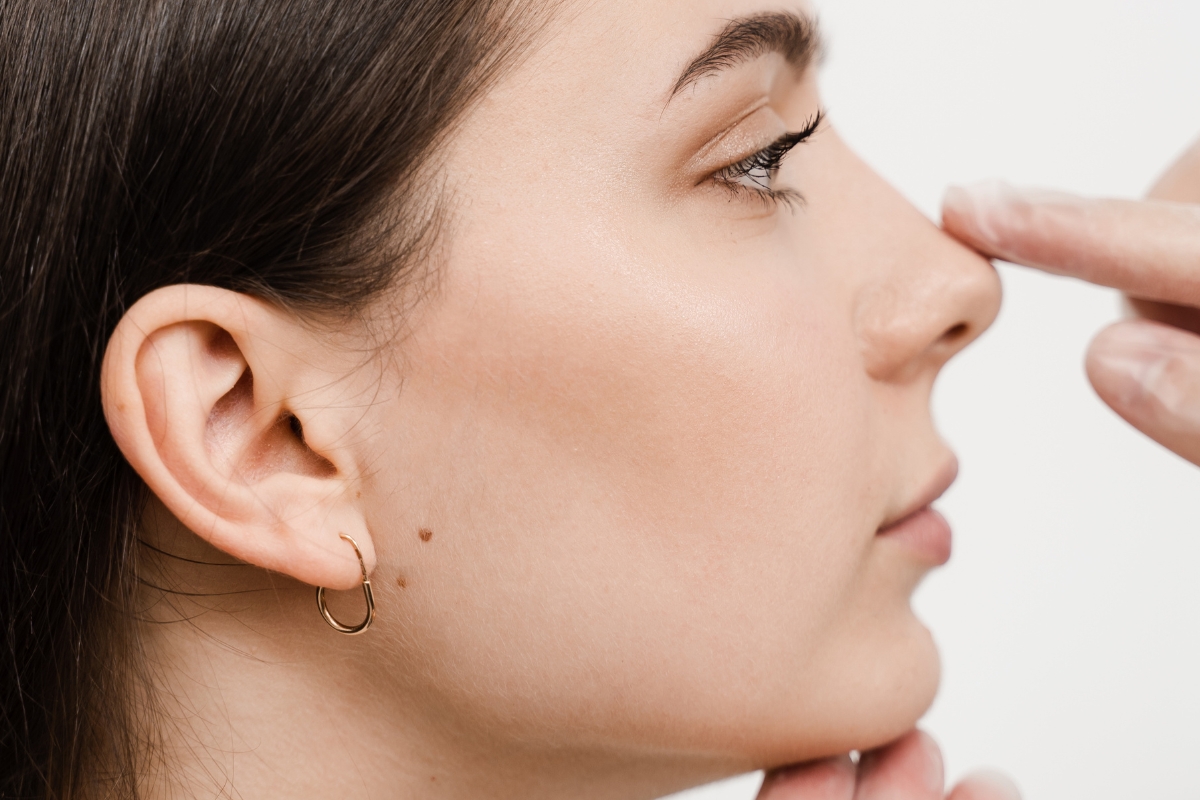
What to Expect Before, During, and After Liquid Rhinoplasty?
To minimize potential vascular complications and other side effects, medical experts use a strict procedure involving the following steps:
Preparation Before Treatment
Preparation is a simple but important step that helps reduce bruising, mild swelling, and other temporary side effects. Before your appointment, you should avoid alcohol and blood-thinning medications or supplements for 24–48 hours.
Arrive with clean skin and no makeup, and always disclose any prior filler injections or previous nose surgery. A numbing cream is typically applied before treatment to improve comfort and make the procedure more tolerable.
What Happens During the Entire Procedure
The procedure for non-surgical nose reshaping typically takes 15 to 30 minutes to complete. The injector begins by cleaning and carefully marking the injection site. Filler is then placed slowly using advanced techniques, with constant attention to nasal anatomy and symmetry.
The provider shapes the nose in real time, making minor adjustments to ensure natural-looking results. Most clients require less than one syringe. Injectors avoid repeated injections in a single session to reduce risk, as precision and restraint are critical in this high-risk area.
Pain Level and Comfort
Discomfort remains minimal for most people. You may feel pressure rather than pain during filler injections. Modern hyaluronic acid fillers contain lidocaine, which significantly improves comfort, and the numbing cream further reduces sensation. Any tenderness typically fades quickly after the procedure.
Immediate Results and Aftercare
You will see instant results immediately after treatment. The nose appears smoother, straighter, and more balanced with other facial features. Temporary effects may include mild swelling, redness at the injection site, and occasional bruising.
Aftercare instructions usually include avoiding touching or massaging the nose, refraining from wearing glasses or sunglasses for 24–48 hours, and skipping intense exercise for 1 day. You can return to normal activities and daily activities the same day.
Recovery Timeline and Downtime
Nose fillers involve minimal downtime. During days one to two, you may experience mild swelling or tenderness. Between days three and five, the shape continues to settle. By week one, the final refined appearance becomes fully visible. Most people resume work and social activities immediately, and bruising remains uncommon when the procedure is performed correctly.
How Long Do Results Last?
A common question is how long results last. Nose filler results typically last between 9 and 18 months, depending on the filler type used, your metabolism, injection depth, and whether you maintain regular touch-ups. Because dermal fillers temporarily change the nose without surgery, follow-up appointments help preserve results and maintain balance over time.
Are Nose Fillers Dangerous?
The nose is a high-risk area for filler injections due to its complex vascular anatomy, with complications including tissue necrosis and vision loss. This area contains a dense network of blood vessels that connect directly to critical structures, which means injector skill and technique matter more here than almost anywhere else on the face.
When performed by an experienced medical injector using hyaluronic acid fillers, nose fillers are generally safe and well-tolerated. Problems arise when providers lack advanced anatomical knowledge, use poor technique, inject too aggressively, or fail to follow strict safety protocols.
Severe complications are rare, especially when treatment uses reversible hyaluronic acid fillers and advanced techniques. Permanent fillers significantly increase risk and are not recommended for the nose.
How Professionals Reduce Risk
A qualified injector prioritizes client safety by:
- Conducting a thorough consultation and risk assessment
- Avoiding high-risk injection planes
- Using minimal product and avoiding repeated injections
- Keeping emergency protocols and reversal agents available
Hyaluronic acid fillers offer an added safety advantage because they can be dissolved if a problem arises.
Derma Clinic: The Best Place for Nose Fillers in Dubai
Derma Clinic Dubai is recognized for delivering safe, precise, and natural-looking nose fillers using advanced non-surgical rhinoplasty techniques. Our medically trained injectors specialize in high-risk facial areas, with deep expertise in nasal anatomy and vascular safety.
Every treatment follows a personalized treatment plan, using only premium hyaluronic acid fillers to refine the nose while preserving facial harmony. We prioritize subtle enhancement, user safety, and consistent results.
If you want expert care, minimal downtime, and results you can trust, book your consultation today and experience precision-led nose fillers in Dubai.

FAQs
Is a liquid nose job safer than surgery?
A liquid nose job avoids surgical risks and recovery but carries its own risks due to vascular anatomy. Common side effects of non-surgical nose reshaping include temporary swelling, redness, and bruising at the injection site.
Can nose fillers make the nose smaller?
No. Fillers reshape the nose by adding volume to improve balance and facial harmony, not by reducing size. Nose fillers are purely cosmetic and do not alter bone, cartilage, or internal nasal structures that control airflow.
Are nose fillers permanent?
No; HA fillers are temporary. For most patients seeking long-term improvement, rhinoplasty is the superior option compared to nose fillers.
Can nose fillers fix breathing problems?
No. Functional rhinoplasty is recommended for people with breathing problems, as it addresses internal nasal structures, unlike fillers.
How many syringes are needed?
Most clients need less than one syringe for natural-looking results.
Is bruising common?
Bruising is possible but uncommon. Common side effects of nose fillers include temporary swelling, redness, and bruising at the injection site.
How soon can I resume normal activities?
Most people return to daily activities immediately after treatment.